
As Warren Buffett stated
money.
Rule No. 1
The Meaning Behind ‘Diviniti’
Divine
symbolizing higher purpose, integrity,
and universal wisdom
Niti
a principle rooted in Indian philosophy,
reflecting ethical policy, moral
governance, and strategic intent
Together, they capture the spirit of our Special Investment Fund— one that balances financial growth with responsibility and purpose.
Diviniti Equity Long Short Fund is more than just an investment option.
It’s a forward-looking fund built on values, designed for long-term, responsible wealth creation.
All about SIFs
Key Differentiation Points
| SIF | MF | PMS | AIF* | |
|---|---|---|---|---|
| Minimum Investment | ₹10 lakh (across strategies) |
₹100 | ₹50 lakh | ₹1 crore |
| Taxation at Investor Level | Equity – LTCG 12.5% (12m) Debt – Slab rate Other – LTCG @ 12.5% (after 24m) |
Equity – LTCG 12.5% (12m) Debt – Slab rate Other – LTCG @ 12.5% (after 24m) |
Taxed in the hands of investor at each transaction level. | Nil |
| Taxation at Fund Level | Nil as per Section 10 (23D) | Nil as per Section 10 (23D) | Nil | @ MMR of 39%* |
| Leverage & Derivatives | No leverage permitted. Short exposure through unhedged derivative up to 25% + Derivatives for hedging & rebalancing |
No leverage permitted. Derivatives only for Hedging & rebalancing |
No leverage permitted. Derivatives only for Hedging & rebalancing |
Leverage permitted with gross exposure up to 200% |
STCG for SIF and Mutual fund: Equity (upto12 months) –20%; Debt –slab rate; Others (upto24 months) –slab rate. Additional cess& surcharge, if applicable. Please consult tax advisor for better understanding and taxation applicable to specific investments.* CAT III AIF assuming that it will be a business income product.
Team behind SIF

Mr. Jatinder Pal Singh
Mr. Jatinder Pal Singh is the Chief Executive Officer (CEO) of the organization and a seasoned professional with over 25 years of experience in the mutual fund industry. He has held leadership roles across marketing, sales, and distribution functions.
Before assuming the CEO role, he served as Chief Marketing Officer at Mahindra Manulife Investment Management, where he was responsible for leading marketing and distribution strategies. His earlier career includes senior positions at Morgan Stanley Investment Management as National Head – Sales & Distribution and at HSBC Asset Management (India) as Vice President & Regional Manager – Sales & Distribution.
A qualified Associate Chartered Accountant (A.C.A.) and Cost and Works Accountant (C.W.A.), Mr. Singh also holds a Bachelor of Commerce (Hons.) degree.
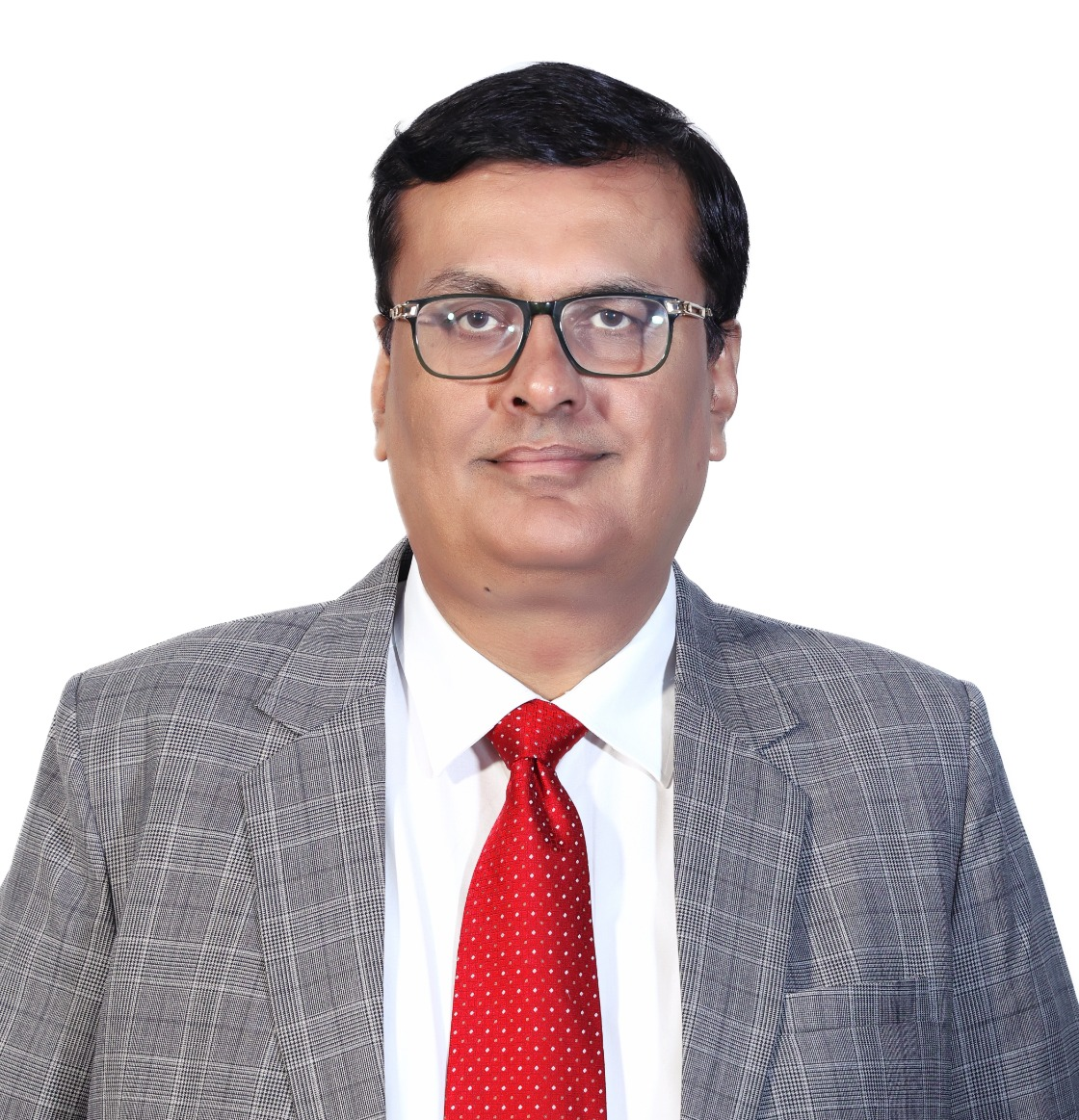
Mr. Rajesh Bhatia
Mr. Rajesh Bhatia is the Chief Investment Officer (CIO) of ITI Mutual Fund and brings over 30 years of investment experience in Indian equities and more than a decade in Alternative Investments, with a focus on long-short fund management.
Before joining ITI Mutual Fund, he served as Chief Investment Officer at Simto Investments, a subsidiary of Tata Investments. He was also the Co-founder and CIO at Heritage India Advisors, the Indian advisor to the New York-based Heritage Capital — an India long-short equity fund. The Heritage Fund was recognized among the Top 5 funds in India for its performance in 2010 by Eurekahedge, an independent international data provider and alternative research firm.
Earlier in his career, Mr. Bhatia was Senior Vice President and Head of Portfolio Management Services (PMS) at Reliance Capital Asset Management, where he established the PMS business unit in 2004.
He holds a Bachelor’s degree in Commerce from H.R. College of Commerce & Economics, is an Associate Member of the Institute of Cost Accountants of India (ACMA) and is a Chartered Financial Analyst (CFA) charterholder from the CFA Institute, USA.

Mr. Laukik Bagwe
Mr. Laukik Bagwe brings over 25 years of experience in fund management, portfolio management, and fixed-income markets, with a specialization in money markets, government securities, and corporate bonds.
Before joining the organization, he served as Vice President at DSP Asset Managers Private Limited. Earlier, he was associated with Derivium Securities India Private Limited as Senior Dealer.
Mr. Bagwe will serve as the Chief Investment Officer (CIO) for the Diviniti SIF, bringing his deep expertise in managing diverse asset classes and investment strategies to the role.
He holds a Post Graduate Diploma in Business Administration (PGDBA) with a specialization in Finance and Marketing from ICFAI, Hyderabad. He has also completed the Senior Management Program (SMP) in Leadership and Management from the Indian Institute of Management (IIM) Calcutta.

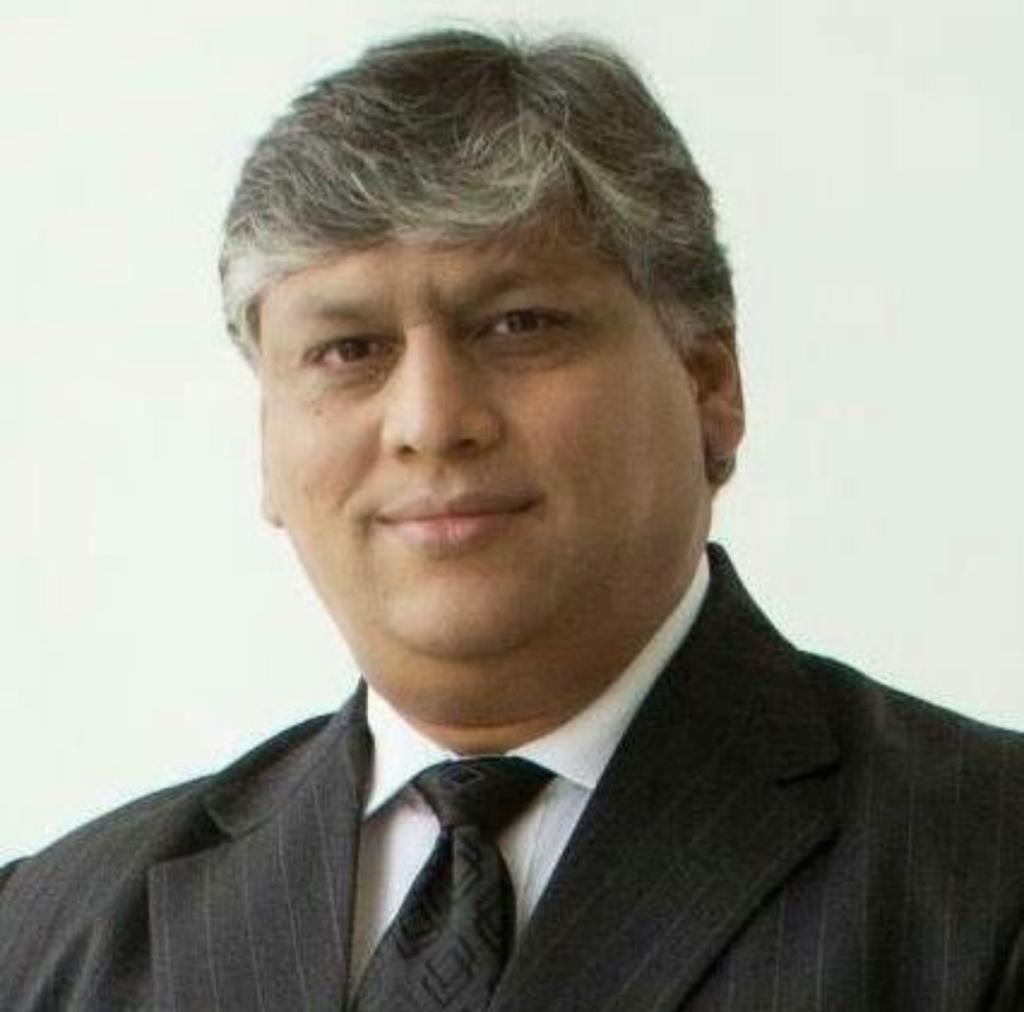
Mr. Vasav N. Sahgal
Mr. Vasav N. Sahgal is a CFA charterholder and holds a Postgraduate Diploma in Securities Law. He is also a Commerce graduate. He brings over seven years of experience in fund management and equity research.
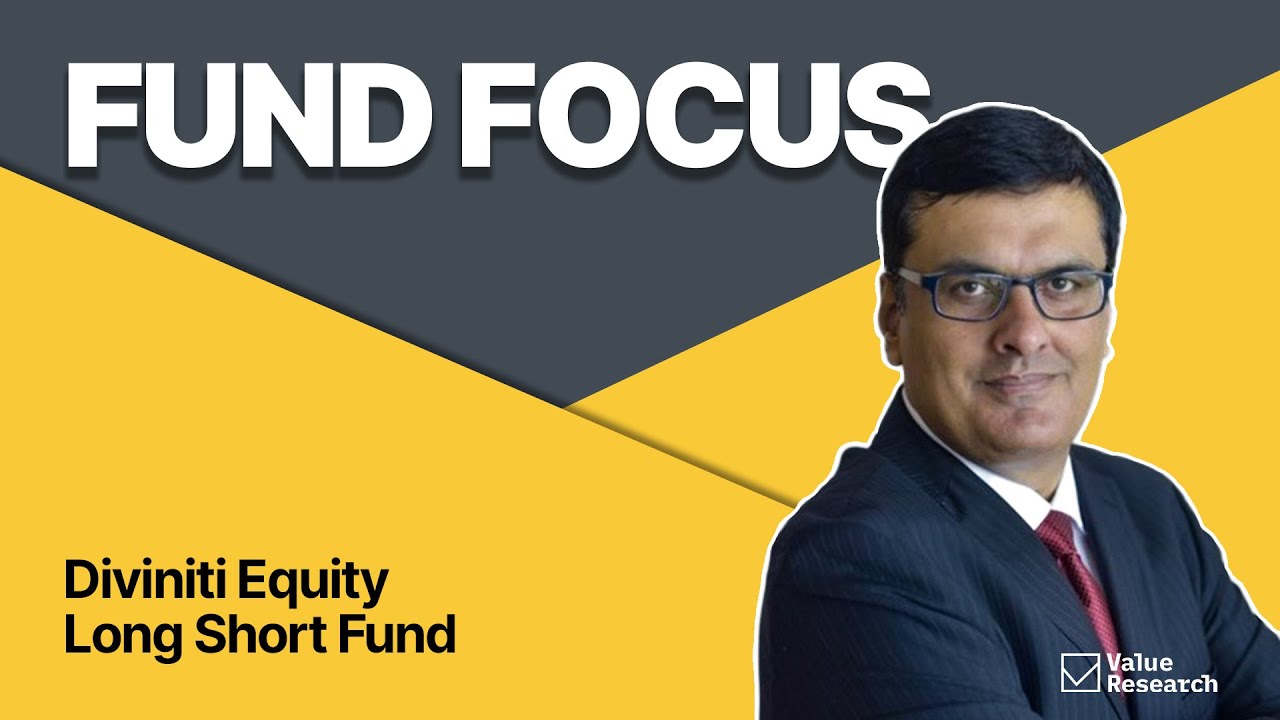
Mr. Sahgal will serve as the Fund Manager for the Diviniti Equity Long Short Fund, leveraging his expertise in equity research and portfolio management.
He joined the organization in February 2025. Prior to this, he was associated with Quant Money Managers as Fund Manager, where he was part of the team from its inception until his transition to ITI.
Before his fund management role, Mr. Sahgal worked as an Equity Research Analyst at Quant Broking, focusing on the FMCG sector. He began his career as an Equity Research Intern at Eqestar Capital.






ITI Group Profile
The Investment Trust of India Limited (ITIL) is a leading financial services conglomerate, headquartered in Mumbai, offering a diverse range of products and services.
ITI is a public limited company with Mr. Sudhir Valia/Associates holding a majority stake. Mr. Valia is also a co-promoter of Sun Pharmaceuticals, India’s largest pharmaceutical company with a market cap of USD 30 bn.
Group’s businesses include asset finance, asset management, institutional broking, and investment banking.
ASSET FINANCING
- Auto Finance
- SME / MSME Finance
- Microfinance
- Housing Finance
- Edu Finance
- LAS
ASSET MANAGEMENT
- Mutual Fund
- Long-Short Equity Fund
- ARC
- Venture Capital
INSTITUTIONAL BROKING
- Equity Trading
- Association with marquee investors
- Coverage of 150+ companies
INVESTMENT BANKING
- Fund Raising
- M & A
- Corporate Advisory
- Private Equity
Media
Downloads
Request Call Back
FAQ's
- Equity-Oriented Investment Strategies
- Debt-Oriented Investment Strategies
- Hybrid Investment Strategies
| Strategy Name | Key Features | Redemption Frequency |
|---|---|---|
| Equity Long-Short Fund | Min. 80% in equity/equity-related instruments; max. 25% unhedged short via derivatives | Daily or lesser |
| Equity Ex-Top 100 Long-Short | Min. 65% in equity excluding top 100 stocks; max. 25% short (non-large-cap stocks) | Daily or lesser |
| Sector Rotation Long-Short | Min. 80% in max 4 sectors; max. 25% sector-level short exposure | Daily or lesser |
| Strategy Name | Key Features | Redemption Frequency |
|---|---|---|
| Debt Long-Short Fund | Invests across durations in debt; allows limited unhedged short exposure via debt derivatives | Weekly or lesser |
| Sectoral Debt Long-Short | Min. 2 sectors; max. 75% in one sector; max. 25% sector-level short exposure via derivatives | Weekly or lesser |
| Strategy Name | Key Features | Redemption Frequency |
|---|---|---|
| Active Asset Allocator Long Short | Dynamic allocation across equity, debt, REITs, InVITs, and commodity derivatives; max. 25% unhedged short | Twice a week or lesser |
| Hybrid Long-Short Fund | Min. 25% in equity and 25% in debt; max. 25% unhedged short via derivatives | Twice a week or lesser |
Yes. SIF strategies may be launched as:
- Open-ended
- Close-ended
- Interval strategies
The AMC decides the subscription and redemption frequency, which can vary (daily, weekly, etc.) depending on the strategy.
Yes. SIF strategies are allowed to use exchange-traded derivatives for:
- Hedging
- Portfolio rebalancing
- Unhedged short exposure (limited to 25%)
- Futures: Price × Lot size × Contracts
- Options bought: Premium × Lot size × Contracts
- Options sold: Market Price × Lot size × Contracts
Post the criteria fulfillment, Systematic Investment Plan (SIP), Systematic Transfer Plan (STP), and Systematic Withdrawal Plan (SWP) are allowed under SIF, provided the aggregate investment across all strategies remains ₹10 lakhs.
• Passive breach (due to marked to market): You may only redeem the entire remaining amount; no partial redemptions allowed.
1. All the units of the investor held across all SIF Investment strategies has to be frozen for debit/redemption.
2. Notice of 30 calendar days must be given to such an investor to rebalance the Investments to comply with the Minimum Threshold Amount.
a. If the investor complies to rebalance his investment within 30 days’ notice period, the units of such an investor will be unfrozen, and no further actions will be taken.
b. If the investor fails to rebalance the investment within the 30 calendar days period, the frozen unit shall be automatically redeemed by the AMC at a NAV applicable for the next immediate business day after the 30 days' notice period.
o For Equity Oriented Investment Strategy – While the purchase can be daily, the redemption frequency is ‘Daily or lesser’ and hence a NAV daily frequency will be optimal.
o For Hybrid and Debt Oriented Investment strategies, while the purchase can be daily, the redemption frequency can be either daily, weekly, fortnightly, monthly, quarterly, half-yearly, yearly or other suitable intervals. As mentioned in SEBI Circular para 7.1.1.2, the illustration states that ‘An investment strategy may permit daily subscriptions while offering weekly redemptions’. Based on the above analogy, AMC may opt for either daily NAV or as per the frequency of redemption opted by AMC.
• For folios held in DEMAT mode, due to market trades/off market transfers, the threshold limit of INR 10 lakhs cannot be monitored for active breach by the RTA as the BENPOS is received by RTA only on weekly basis (every Friday).
• As per the latest SEBI circular dated 29th July 2025, in case of active breach:
- All the units of the investor held across all SIF Investment strategies have to be frozen for debit/redemption.
- Notice of 30 calendar days must be given to such an investor to rebalance the Investments to comply with the Minimum Threshold Amount.
a. If the investor complies to rebalance his investment within 30 days’ notice period, the units of such an investor will be unfrozen, and no further actions will be taken.
b. If the investor fails to rebalance the investment within the 30 calendar days period, the frozen unit shall be automatically redeemed by the AMC at a NAV applicable for the next immediate business day after the 30 days' notice period.
o If the investors requests for a partial redemption, then it will not be allowed as investor must opt for full redemption only.
o All inflows will continue (additional purchase, switch-in, STP-in etc)
o All partial redemptions will be rejected (partial redemption, partial switch out and STP outs)
Yes, as per Para 10 of SEBI circular dated February 27th 2025, any entity engaged in sale and/or distribution of MF products shall also be eligible to offer products under the SIF subject to such entity having passed NISM Series XIII: Common Derivatives Examination.
This implies that any ARN or EUIN holder attached to the ARN must be NISM Series VA certified and NISM Series XIII certified to engage in sale and/or distribution of SIF.
Yes. KFIN offers both a standalone SOA for SIF and an Interactive SOA including MF and SIF holdings at PAN level. The same depends on AMCs compliance in terms of the layout (keeping brand guidelines in mind).
The redemption frequency is daily (business days) or any lesser frequency as may be determined by the AMC. Currently, redemptions are processed on a daily basis.
In the interest of unitholders, the AMC will issue an addendum in case of any change to the redemption frequency.
Yes. AMCs may impose a notice period of up to 15 working days for redemptions, depending on the liquidity profile of the strategy.
Key Points:
- NAV applicable will be based on the end of the notice period.
- The notice period must be disclosed in the offer document.
Redemptions causing the investment to fall below ₹10 lakh are not permitted.
Exceptions:
- If the shortfall is due to market movements (passive breach), where the partial redemptions are not allowed.
- In such cases, only full redemption of the remaining investment is permitted.
Not necessarily, however all close-ended and interval SIF strategies must be listed on recognized stock exchanges to provide investors with an exit option.
Yes. The redemption frequency and notice period are designed to ensure:
- Efficient liquidity management by the fund manager
- Fair treatment to all investors
These will vary depending on the specific strategy’s asset class, derivative exposure, and redemption pattern.
It’s a pictorial risk meter with 5 levels of risks (Lowest to Highest) for investment strategies of SIF. SIF shall assign risk level for schemes at the time of launch of New Fund Offer of the investment strategy.
AMCs must update risk bands monthly and disclose changes along with portfolio details on websites within 10 days from the close of each month.
SIFs are also required to disclose risk level of investment strategies as on 31st Mar of every year along with number of times Risk level has changed over the year on websites.
At present, SEBI has not issued a definitive taxation framework for SIFs. Treatment of capital gains, dividends, and derivative income may align either with mutual fund norms or AIF rules.
Investors should anticipate taxation on profits (short-term/long-term based on holding period), with final clarity expected once SEBI issues detailed guidelines.
Investors are advised to seek professional advise about the taxation of SIF investments and returns.
Under normal market conditions, redemptions will follow the prescribed frequency. In extraordinary scenarios such as extreme market volatility, the AMC may apply mechanisms like:
- Side-pocketing (segregation of stressed assets)
- Redemption gates (limiting outflows to protect investors)
- Temporary suspension of redemptions if required by regulation
All such actions, if taken, will be in line with SEBI guidelines.
SIFs involve unique risks beyond traditional mutual funds, including:
- Leverage Risk – use of derivatives may magnify returns or losses
- Counterparty Risk – reliance on third parties in derivative contracts
- Liquidity Risk – difficulty in exiting positions during volatile markets
- Market/Strategy Risk – long-short strategies may underperform in certain cycles
A detailed risk disclosure will be provided in the scheme documents.
The above FAQs are provided for general understanding purpose of SIF investment strategy and shall not be construed as an offer for sale. Investors are advised to consult with their income tax advisor before making any investment decisions.
| This product is suitable for investors who are seeking* | Risk Band* | Benchmark Risk Band* [Nifty 50 (TRI) index] |
|---|---|---|
* Investors should consult their financial advisers if in doubt about whether the product is suitable for them. |
RISK BAND
LOWER RISK
HIGHER RISK
1
2
3
4
5
RISK-LEVEL 2 |
RISK BAND Benchmark Name - Nifty 50 TRI
LOWER RISK
HIGHER RISK
1
2
3
4
5
RISK-LEVEL 5 |
Risk band dated December 31, 2025
For More information please refer to https://itiamc.com/
Toll Free Number 1800 266 9603 | Email contact.sif@itiorg.com
All figures and data given in the document are dated unless stated otherwise. In the preparation of the material contained in this document, the AMC has used information that is publicly available, including information developed in-house. However, the AMC does not warrant the accuracy, reasonableness and/or completeness of any information.
The information provided is not intended to be used by investors as the sole basis for investment decisions, who must make their own investment decisions, based on their own investment objectives, financial positions and needs of specific investor. Investors are advised to consult their own legal tax and financial advisors to determine possible tax, legal and other financial implication or consequence of subscribing to the units of Diviniti SIF. The information contained herein should not be construed as a forecast or promise nor should it be considered as an investment advice.
The AMC (including its affiliates), the Mutual Fund, Diviniti SIF, the trust and any of its officers, directors, personnel and employees, shall not be liable for any loss, damage of any nature, including but not limited to direct, indirect, special, exemplary, consequential, as also any loss of profit in any way arising from the use of this material in any manner.
Past performance may or may not be sustained in future and is not a guarantee of future returns. This document is for information purposes only and should not be construed as investment advice.
Other Important Links
Quick Links
Complaint Filing & Resolution Process
At ITI Mutual Fund, we believe resolving your problem helps us review our processes and take necessary steps to prevent recurrence. contact.sif@itiorg.com and/or contact at:
ITI Mutual Fund
ITI House
36, Dr. R. K. Shirodkar Road
Parel, Mumbai – 400 012
Phone No.: 1800-266-9603
You can also lodge your grievances with SEBI at
https://scores.sebi.gov.in.
For any queries, feedback or assistance, please contact SEBI on Toll Free Helpline:
1800 22 7575 / 1800 266 7575
Filing of complaints through SEBI’s Online portal
‘SCORES’ – Easy & Quick.
For Online Dispute Resolution (ODR):
https://smartodr.in